Understanding Adaptogens and Amphoteric Herbs: Navigating Herbal Support for Stress and Balance
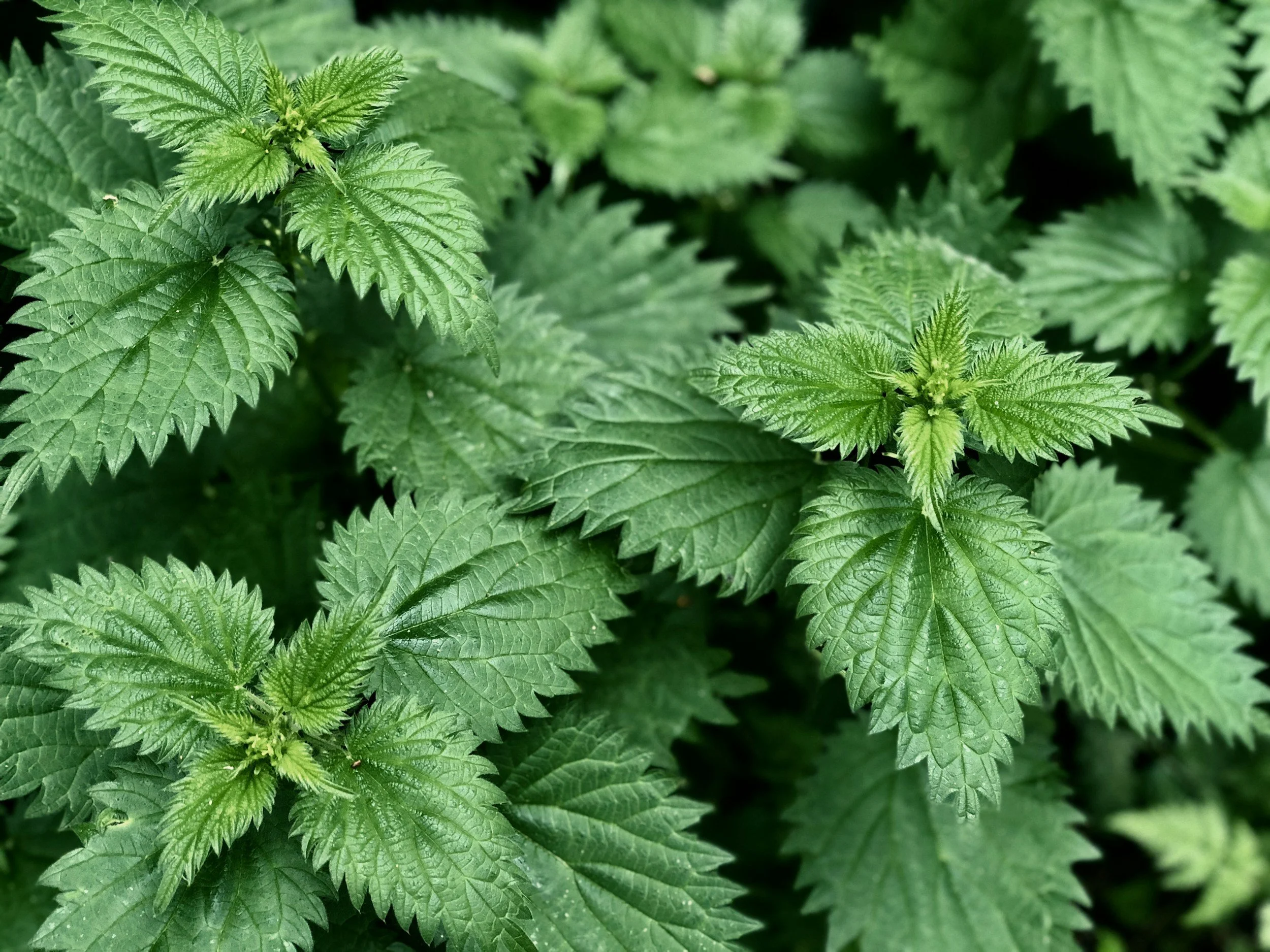
Urtica Dioica - Stinging Nettles
In the realm of herbal medicine, two categories of herbs often come into focus for their roles in supporting the body's response to stress and maintaining physiological balance: adaptogens and amphoteric herbs. While they may share some overlapping properties, they function through distinct mechanisms and are applied differently in clinical herbalism. This article explores the differences between these two types of herbs, provides examples of each, and discusses their relevance, particularly within the context of Western herbal traditions.
Adaptogens: Modulating the HPA Axis for Stress Resilience
Adaptogens are a class of herbs that enhance the body's ability to adapt to stress by modulating the hypothalamic-pituitary-adrenal (HPA) axis, a central component of the body's stress response system. According to Panossian and Wikman (2010), adaptogens must be non-toxic, have a non-specific response in the body, and exert a normalizing influence on physiology.
These herbs influence the HPA axis and related systems, helping regulate cortisol and other stress hormones. This modulation supports equilibrium during periods of physical, emotional, or environmental stress.
Examples of Adaptogenic Herbs and Supporting Research:
Withania somnifera (Ashwagandha): Shown to reduce cortisol levels and improve stress response (Chandrasekhar et al., 2012, Indian Journal of Psychological Medicine).
Rhodiola rosea: Demonstrated to improve mental performance and reduce fatigue under stress (Panossian & Wikman, 2010, Phytomedicine).
Eleutherococcus senticosus (Eleuthero): Found to increase endurance and reduce stress-induced fatigue (Brekhman & Dardymov, 1969, Annual Review of Pharmacology).
Schisandra chinensis: Known for enhancing cognitive function and physical stamina under stress (Panossian et al., 2008, Pharmaceuticals).
Ocimum sanctum (Holy Basil): Shown to reduce stress markers and support emotional well-being (Cohen, 2014, Journal of Ayurveda and Integrative Medicine).
Panax ginseng: Known to support physical endurance and HPA axis regulation (Kennedy et al., 2001, Psychopharmacology).
Amphoteric Herbs: Restoring Balance Through Dual Action
Amphoteric herbs are characterized by their ability to normalize body functions, whether those functions are overactive or underactive. Unlike adaptogens, which primarily focus on the HPA axis and systemic stress response, amphoterics work on specific organ systems and physiological processes, providing tailored modulation.
The term "amphoteric" refers to this dual action, meaning that these herbs can stimulate or calm based on what the body needs. This makes them useful in conditions of functional imbalance, such as fluctuating immune response, blood pressure, or hormone levels.
Examples of Amphoteric Herbs:
Ganoderma lucidum (Reishi): Modulates immune responses and shows both immunostimulant and immunosuppressant activity depending on context (Paterson, 2006, Phytochemistry).
Schisandra chinensis: Functions as both a stimulant and sedative depending on dosage and individual response (Panossian et al., 2008).
Crataegus spp. (Hawthorn): Regulates cardiac function and blood pressure, supporting either high or low blood pressure states (Tassell et al., 2010, Phytomedicine).
Urtica dioica (Nettle): Acts as a nutritive tonic and has been shown to influence endocrine and immune functions (Wianowska et al., 2015, Journal of AOAC International).
Matricaria chamomilla (Chamomile): Calms the nervous system while mildly stimulating digestion, depending on the body's state (Amsterdam et al., 2009, Journal of Clinical Psychopharmacology).
Integrating Western Materia Medica: Emphasizing Local and Accessible Herbs
In my clinical herbal practice, I prioritize the use of Western materia medica, particularly herbs native to or widely available in North America. This approach promotes sustainable herbalism while also strengthening our connection to the plants that share our immediate environment.
Working with herbs such as Solidago spp. (Goldenrod), Achillea millefolium (Yarrow), Passiflora incarnata (Passionflower), and Taraxacum officinale (Dandelion) supports a bioregional practice rooted in accessibility and ancestral familiarity. These plants offer therapeutic actions from nervine support to detoxification, without the added barriers of importation or unfamiliarity.
Conclusion
Understanding the difference between adaptogenic and amphoteric herbs helps refine our approach to herbal support. Adaptogens primarily modulate the HPA axis and enhance systemic stress resilience, while amphoteric herbs restore physiological balance at a more targeted, organ-specific level. While some herbs—like Schisandra—may exhibit both actions, clear distinctions remain critical in formulation and application.
References
Amsterdam, J. D., et al. (2009). A randomized, double-blind, placebo-controlled trial of oral Matricaria recutita (chamomile) extract therapy for generalized anxiety disorder. Journal of Clinical Psychopharmacology, 29(4), 378–382.
Brekhman, I. I., & Dardymov, I. V. (1969). New substances of plant origin which increase nonspecific resistance. Annual Review of Pharmacology, 9(1), 419–430.
Chandrasekhar, K., et al. (2012). A prospective, randomized double-blind, placebo-controlled study of safety and efficacy of a high-concentration full-spectrum extract of Ashwagandha root in reducing stress and anxiety in adults. Indian Journal of Psychological Medicine, 34(3), 255–262.
Cohen, M. M. (2014). Tulsi - Ocimum sanctum: A herb for all reasons. Journal of Ayurveda and Integrative Medicine, 5(4), 251–259.
Kennedy, D. O., et al. (2001). Attenuation of the acute stress response to the Trier Social Stress Test with Panax ginseng. Psychopharmacology, 156(3), 290–298.
Panossian, A., & Wikman, G. (2010). Effects of adaptogens on the central nervous system and the molecular mechanisms associated with their stress-protective activity. Phytomedicine, 17(6), 481–493.
Panossian, A., et al. (2008). Pharmacology of Schisandra chinensis Bail.: An overview of Russian research. Pharmaceuticals, 1(1), 1–19.
Paterson, R. R. M. (2006). Ganoderma—a therapeutic fungal biofactory. Phytochemistry, 67(18), 1985–2001.
Tassell, M. C., et al. (2010). Hawthorn (Crataegus spp.) in the treatment of cardiovascular disease. Phytomedicine, 17(10), 763–775.
Wianowska, D., et al. (2015). Influence of the extraction conditions on the yield of biologically active compounds from nettle leaves. Journal of AOAC International, 98(3), 681–686.